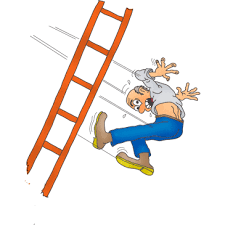
 I'm happy! On WNYC/Morning Edition for Poetry Month, I was asked to read my poem called "No More Ladders" - about last summer's Catskills fall. It was for their "Consequences" theme & it ran at 8:20 a.m. this morning. I think they'll archive it later, and I'll post that. I'm thrilled they chose it. Needs another draft or two, but here it is:
No More Ladders There was that noon hour I had, before the town art show, hot, sunny, the flowers perfumed and pond-sitting near croaking frogs beckoned. But I kept thinking the balcony door could only be dragged open from the outside. The ladder balanced well And I climbed the feet rung upon rung, ready to fix when the steps collapsed, the air went dark, a bright thing flashed, and I couldn't walk. Someone thought I was only waving but then knew In the helicopter, flying over the Catskills all tied up and bracing, I missed the art, but not the show. Brain bleed, concussion, Broken pelvis, torn shoulder. Light too bright, I closed my eyes, making hard work for many, But so glad I could still think of frogs, friends, ponds and family.
0 Comments
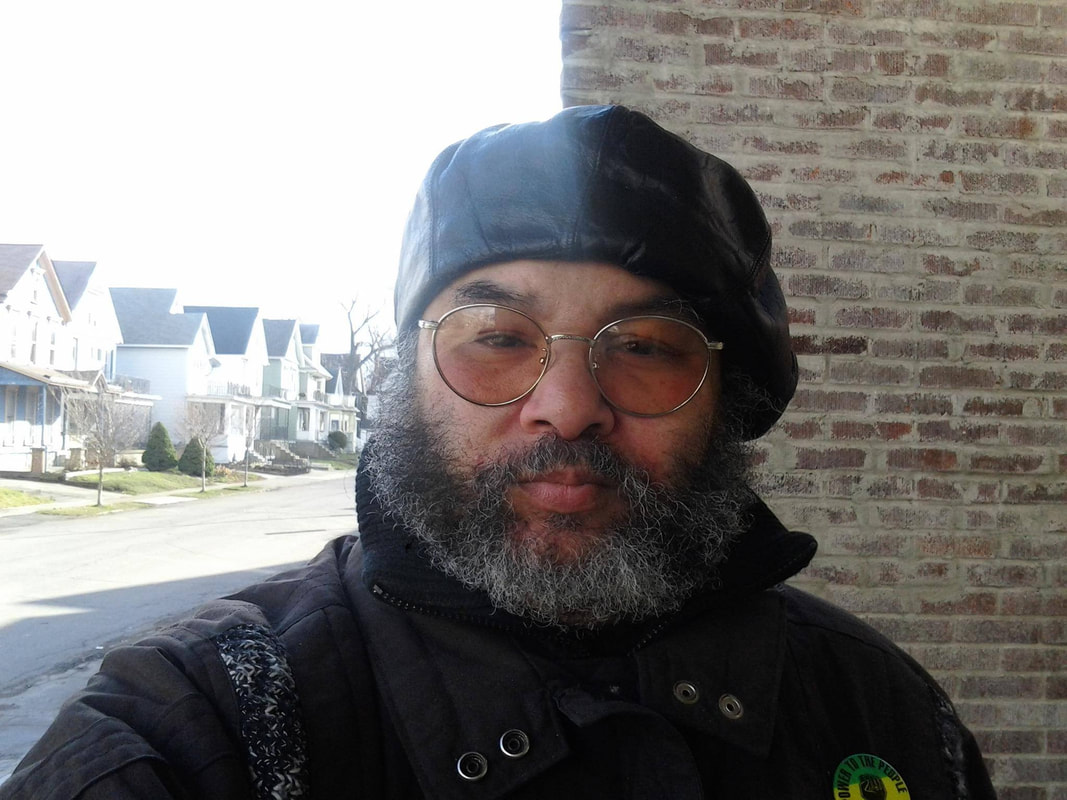 The poet and critic Michael Frank Hopkins, courtesy of his Facebook page. The poet and critic Michael Frank Hopkins, courtesy of his Facebook page. By Harold Goldberg Everything here is so precarious…That no thing is taken for granted. Water is celebrated. Seedlings are celebrated. Breeding is celebrated. Even death is celebrated. No thing here dies, that its passing doesn’t feed something else. In the great cycle of this world, life lays itself down to preserve life, season after season. And no greater love of life is there than this. -Timmain, Elfquest, Volume 6 He was selling his jazz records along with some rare comic books on the steps of the student union. In the chilly fall of north Buffalo when I was 17, that's where I first remember meeting Michael F. Hopkins. He had on a denim jacket and a black beret and had a wistful and serious look in his eye. Like the world, which was not easy, was fodder for a poem to him. Michael died after a recent illness and that has saddened me greatly. I didn't buy a record that day in the 1970s, but as we got to talking, we found common interests in music and Marvel. I was still a DC comics fan, and Michael stroked his short beard as he tried to commiserate. I soon became a fan of artistss Jim Starlin ("Thor") and Barry Smith ("Conan') at his suggestions. He soon alerted me to the brilliance "ElfQuest," Sun Ra, Gwendolyn Brooks, Junai Boothe, Juneteenth celebrations and the University Comic Book Store where he'd buy two or three of the new comics he thought might appreciate in value. When he talked about Blackness with fervor and wit, I began to learn about the real history of Black people in Buffalo and in the United States. There were folks he didn't like much, Dimitri and Barbara at the student newspaper, and critic Leonard Feather. Upon mentioning their names, he would turn his face and close his eyes as though he were smelling something bad. At the time, The Buffalo News was looking for freelance writers for its Friday supplement, a calendar with reviews and features from staff and local journalists. Michael was pretty much blocked as a music writer for The Buffalo News because his work was so creative and poetic. But, thankfully, they did publish his poems many times through the years. In college, Michael added a "(c)" to signify a copyright on everything he wrote, which may have daunted The News since they bought all rights from freelancers. In Michael's case, I believe the copyright idea was also there to prevent racism. Michael knew how much white people stole from Black music artists, and he'd seen it himself with writing. Indeed, The Buffalo News should have worked with this burgeoning talent - if only because there were so few Black writers are the paper at the time. It's probably not much better now there as far as diversity goes. Indeed, that's Buffalo as a whole. The paper published a recent stories entitled: "Buffalo businesses interested in diversity, but only getting started" and "Diversity lacking or non-existent in area police departments." Racism wasn't going to stop Michael. He published jazz criticism and poetry at two or three SUNY Buffalo student newspapers simultaneously. He went beyond Buffalo to publish in Coda. He became a professor at the university. He just keep on going. Together, he and I started a college comic book club, and he was part of the troupe I put together for a comic book-inspired satire serial that aired on WBUF-FM. I think the only time we argued was about a comic book event we put on at the Century Theatre, the same place that the criminal Harvey Weinstein owned before turning to movies. I hated dealing with Harvey and his young thugs at the theatre. Their egos were massive and their threats were real. I recall that Michael may have wanted to pull out of the event, and I wanted to finish what we started. But the argument passed and we continued as great friends throughout college. After college before I left for New York City, we interviewed Wynton Marsalis backstage at the Tralfamadore Cafe, a small theatre that showcased so many artists popular and indie alike. Shortly after his first album was released, I asked the young trumpeter, who was four years younger than me, "What does the Music have to do?" "Our music," said Wynton, "has to swing and be Negroid." Michael nodded and said, "Mmm-hmmm." He always had a wise, sage-like quality to his every move, and this new artist seemed to be steeped in history and politics at a young age. An "Mmm-hmmm" from Michael was like the most thoughtful, full opinion piece in The New York Times. It was deep. But Wynton always appeared mature. It's like he carried the mantle of success and the history that preceded him his shoulders proudly. When I moved out of town to the Journal Square area in Jersey City for my first Manhattan journalism job at a magazine, all of New York's jazz music was within a walk or subway ride away. There was so much to take in. Susie, a transplanted Buffalonian, and I would go to see Barry Harris at a club he had in Chelsea. I always wished Michael were here to take it all in. He taught me so much about jazz and the jazz world that serves me to this day. When I moved to New York, I pushed the people at the magazine I worked for to let me interview some jazz legends - like Miles Davis. Without Michael's conversations with me about Miles' landmark work and some of his more obscure compositions, I would've been at a loss. Instead, the Miles conversation was one of the longest and most fruitful, longest talks I have ever had with an artist. I feel I owe all of that to Michael. So I thought about Michael when I spoke with Miles Davis at a club called The Tunnel. The occasion was a fashion show for a Japanese designer. Miles, clad in black, along with Andy Warhol were the guest hosts. Miles blew one note on his trumpet and walked a few steps in a the long, Matrix-like coat he was asked to wear. From Michael, I'd heard that Miles could be difficult to talk to. But a request was granted and we hit it off. In fact, we talked for a couple of hours. I think I was channeling all the knowledge Michael had passed on to me. We were sitting face to face on the small hassocks that litter a VIP room. I'd read that there was a feud between Wynton and Miles. "I've seen a few magazines say that you and Wynton don't get along." Miles looked down at the ground and said, "That's just what writers make up to sell magazines. There is no feud." I believed Miles. Michael would have, too. Michael and I saw movies together. In fact, we went to see Prince's "Purple Rain" on opening day. We loved every moment as we sang along under our breaths. We were so energized as we left the theater, like part of Prince remained with us. During that July of 1984, the heat in Buffalo was oppressive. We weren't making much money as writers. But we were inspired and felt the coolness of camaraderie, one that was unbreakable. Michael married a young woman whom he called, very affectionately, "the ice cream girl." I'd never seen him so happy and smitten. It was a beautiful, simple, quiet Quaker ceremony in downtown Buffalo with no human officiate present. God himself was to oversee the wedding from above. The couple made declarations of their intentions, and both were ardent and poetic. The marriage didn't last, but I think the memories of their times together did last forever. The height of our concert-going experience was seeing James Brown together. Brown didn't have a hit at the time, and only a few hundred populated the majestic (yet rundown) Shea's Buffalo theater on Main Street. I'd really never seen Michael dance, but he did that night as we stood in awe of one of the great genius entertainers of all time. Brown didn't care that the crowd was sparse. He seemed to play ever harder, mightier, as Michael would say, more "prodigiously." And that word is how I remember Michael. He was a prodigious writer. And he was a prodigious friend as well. By Harold Goldberg For 10 years now, I've been the president of the New York Videogame Critics Circle. Watch our landmark 10th Anniversary show tonight! I promise you'll be both moved and entertained. It begins at 6:30 p.m. on Twitch, and begins at 7:30 p.m. on YouTube. Former Nintendo America president Reggie Fils-Aimé & I co-host this fundraiser for our journalism nonprofit. Latecomer? The YouTube link remains after the show.   Update: The title of this book has been changed to Hopes and Dreams and Hell. By Harold Goldberg My apologies for the relative silence lately. In addition to heading up our nonprofit efforts, I've been working on some fiction! 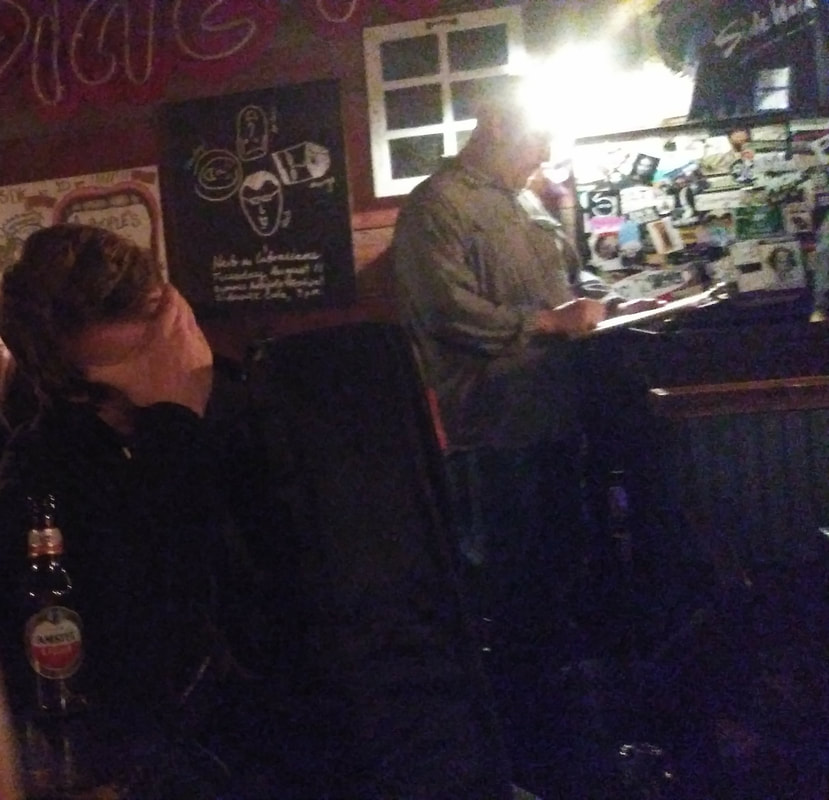 Jon Berger checks the signup list as an audience member considers the end of an era. Photo by Harold Goldberg 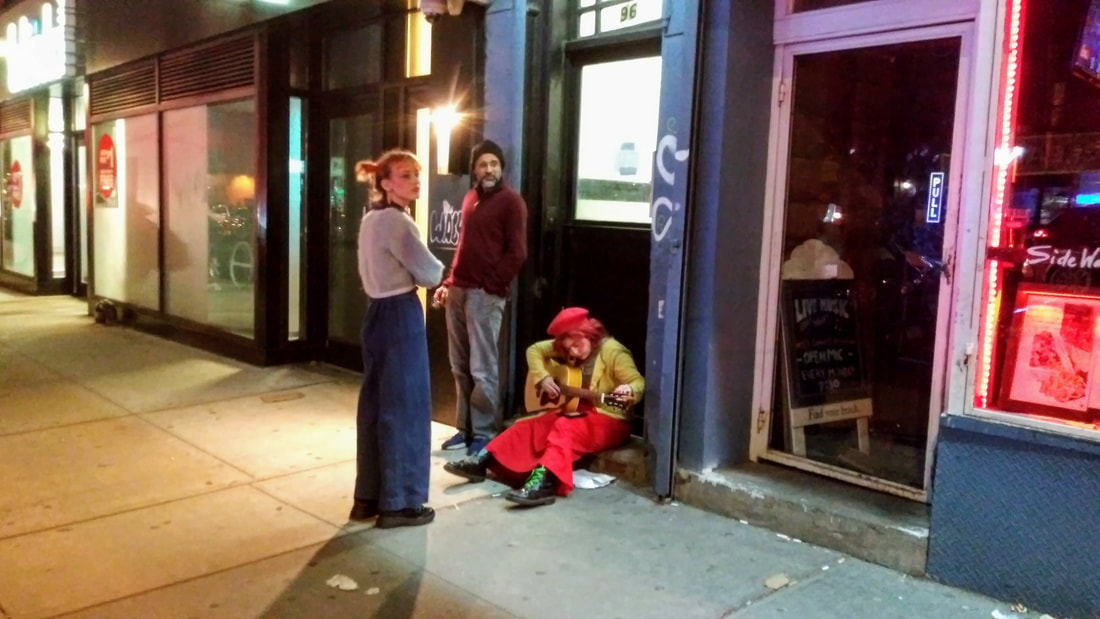 On this night of happy sadness, Sourdoe prepared for their performance. Photo by Harold Goldberg On this night of happy sadness, Sourdoe prepared for their performance. Photo by Harold Goldberg By Harold Goldberg It was shocking. Online, I'd read that the end would soon come to The Sidewalk Cafe and that might mean the end of an institution (which had a formative effect on me). I'd heard that the weekly antifolk open mic night might die as well. When I first moved to town and lived in Jersey City but worked at a Manhattan magazine, I would take long, exploratory walks through East Village, looking for something like solace, love and redemption. On one of these strolls, I passed the junkies trading needles and stories in the park. The East Village was that way then. A few blocks later, I heard music emanating from what, at first look, appeared to be a dark, graveyard dive called The Chameleon (which is now Club Cumming, actor Alan Cummings' destination for cabaret and other artful doings). Inside, The Chameleon was anything but dead. The bartender was Lach and, with black-framed nerd glasses, he was holding court over an open mic he called the Anti-Hoot. Lach, now living in the U.K., was the prime purveyor and creator of the antifolk scene, a musician who would pepper his own sets with, say, the Spider-Man theme song. He was a witty m.c. and singer, but he also possessed the almost undefinable prestidigitation of those who are part creatively brilliant saints and part half-truth telling hustlers. Those two ingredients were essential to Lach's magic of bringing people of disparate personalities together. At The Chameleon, I marveled at the performances of Beck, Michelle Shocked, Paleface, Brenda Kahn, Casey Scott, Tom Clark and John S. Hall. It was a competitive scene and yet, people were generally affable and upfront about their desires for success, and often, lovably self-effacing about their art. Sometimes, the antifolk bar felt like a home away from home. I wrote about it for the Village Voice, and did some readings at the club as well. When the bar closed and Lach moved to the nearby Sidewalk Cafe around 1990, it felt like a reasonable substitution in a brighter spot, this time with food to order (not just booze). It was a place for Heather Woodbury to premiere her amazing What Ever performance art, which included 100 characters she herself transformed into. I knew the Sidewalk for its cheap but hearty all-day breakfasts, a place where, when it was warm, I would sit with the musicians and performers I'd grown to know. I became closest to Brenda Kahn, and enjoyed long talks during which we parsed everything, came to conclusions, then felt we accomplished nothing that would help us with navigating life (except the strengthening of our friendship). All afternoon and sometimes all night, I'd sit and hear about the performers' hopes and dreams for creativity and success. The Sidewalk later became an essential springboard for the brilliance of Regina Spektor, Jeffrey Lewis and Nellie McKay. When Lach left for the U.K., it was stunning to all of us. I went to his apartment sale and bought a Clash DVD and a Japanese tin toy of a spaceman with a camera. We reminisced, talked about who was doing what and looked forward to his creative work in the U.K. Yet the scene continued even without its creator. The music, rough, rugged, yet often empathetic and melodic, was played nightly, even as sections of Brooklyn became more hiply inviting to musician communities than the East Village. I don't mean to say that every night was exciting music-wise at the Sidewalk. I spent a New Year's Eve there a year or so ago and the part I enjoyed more than any of the music was talking with a couple of first time in the U.S. Swedes who wanted to know about our politics. But talking was part of what made The Sidewalk and the antifolk scene alluring. Because of what was something between collegiality and friendship, the place was also a kind of casual salon for the exchange of ideas. I didn't have time to get to The Sidewalk as much as I used to. But from what I've seen, New York City antifolk has evolved into groups of older people and groups of younger people. In the sense of the important spreading knowledge between generations, antifolk is better than it ever has been. As I see it, admittedly from afar, Jon Berger, the spoken word poet, is now its unofficial historian and Peter Dizozza, the playwright and pianist, is its sage experimentalist. On that last night of the open mic, which has from Day One been the beating heart of the antifolk scene, many of the people who played were those I didn't know. Steve Espinola, who I have met, played a Eugene Chadbourne meets Ozzy Osbourne version of "Iron Man" on a tennis racket. It was rife with noisy, ragged perfection. Originally, I had planned to spend one hour there, listening quietly and taking in the varied personalities. Then, I'd leave to prepare for our New York Videogame Critics Circle mentoring at the Bronx's DreamYard Prep School, work on a review and re-write some fiction which may or may not be for an audience beyond me. But soon, I realized how important that last night would be. Jon Berger raged from the stage, angry that the The Sidewalk as he knew it would end. After Jon moved to a corner to greet friends, I saw that everyone was bringing their finest performances, some regulars, some who hadn't played there in six years, one who was there for the first time. M the Myth, someone new to me, sat at the piano and began a searing pop song. It was clear he had one of the evening's best voices, completely stirring. He captured everyone's feeling when he said that the Sidewalk was essential in his life because it was accepting of all the misfits who ventured through its portals. He was completely right. It's been a place where we all entered like misfits, but misfits together as one become something else altogether, something like a force of nature. And so it continued, everyone with one song, everyone giving it their all. I stayed until the open mic's end when Peter Dizozza, name checking 80s experimental theater artist Ethyl Eichelberger, talked about the antifolk outdoor concerts of yore at Tompkins Square Park, then sang "Come Out," which ended with the line of essential optimism. "And you and I from long ago are ever meant to be." As the evening turned into night and single songs would give way to full sets, King Missile's John S. Hall showed up, looked bemused at the large crowd but eventually found a table. I heard that Regina Spektor might step in to play (she did) and that SourDoe, which Berger called the potential future of antifolk, would play an hour after the open mic concluded. But as the performances ended, I slipped out. It's not that I had had enough. I just didn't want to have too much. A few blocks away in a generally happy, pensive cloud, I consumed a slice and too much soda at Two Boots. In the bathroom, found this William Faulkner quote, "People talk about the dead past. The past is not dead. It's not even past." I walked back home with an unusual bounce in my steps, uplifted, thinking that wherever those in Manhattan's antifolk scene hang their collective hats once the Sidewalk closes and opens under a different name, the past is part of it. Because this night's past is not the end, and it's not dead. At all. f 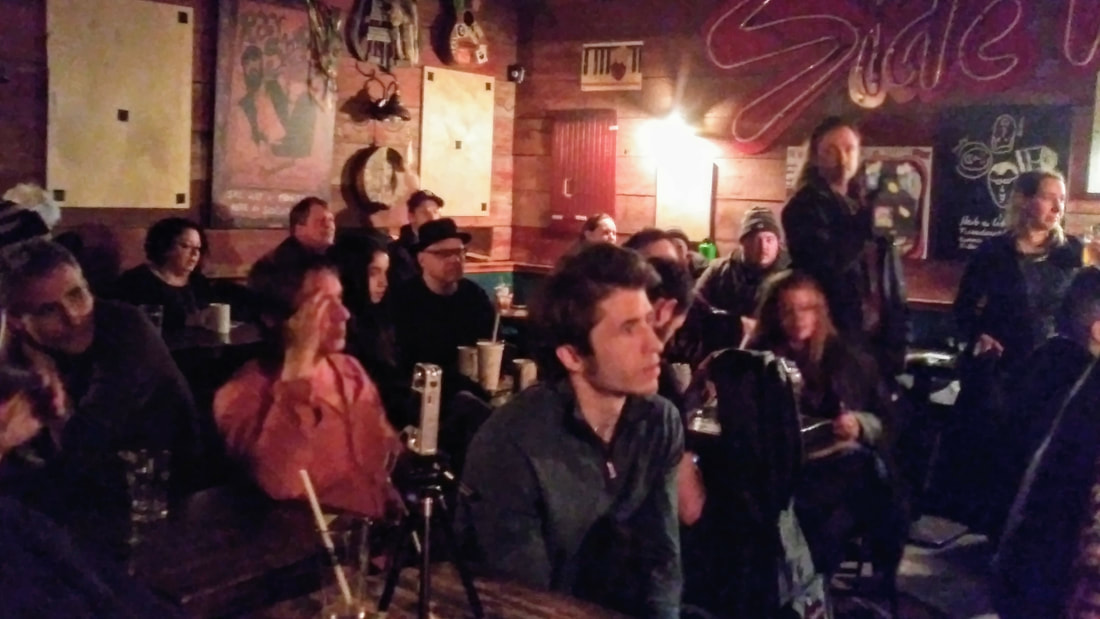 It was a night of musicianship and unity - but a night of sadness as well. 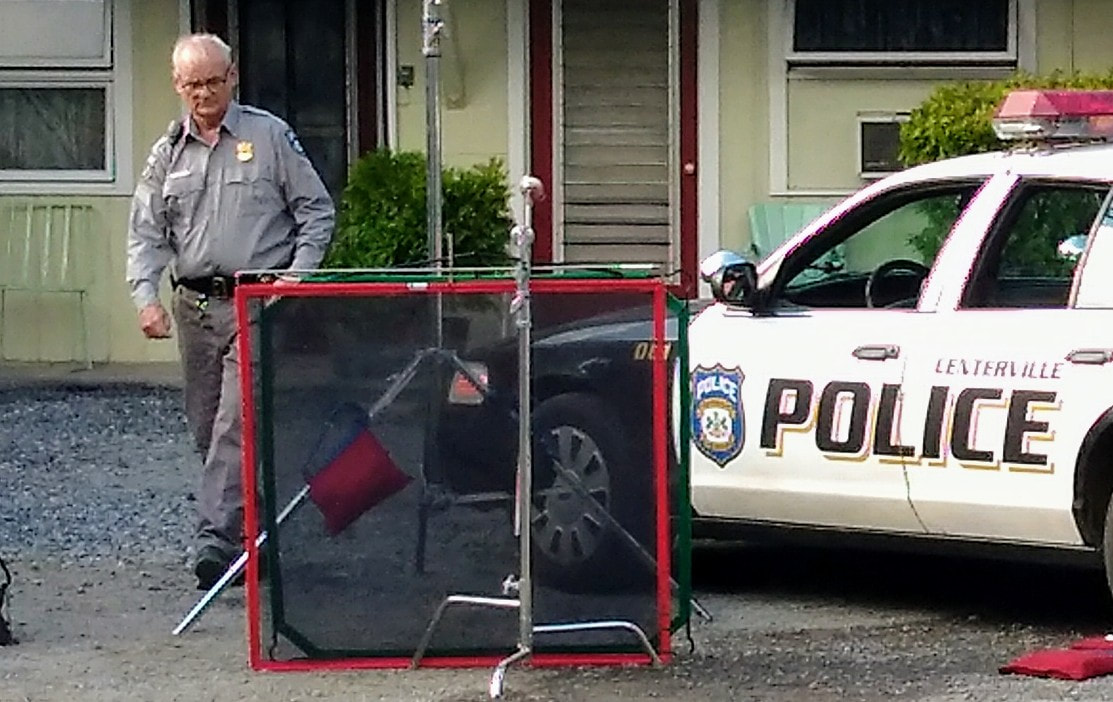 Bill Murray on the Catskills set of "The Dead Don't Die." Photo by Harold Goldberg 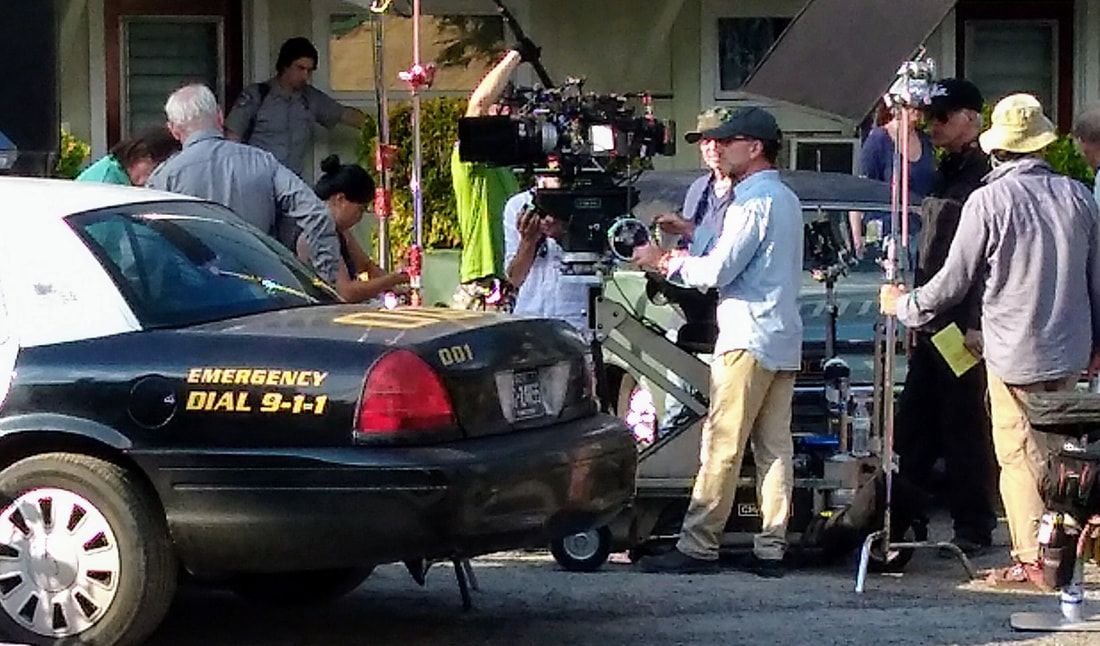 Jim Jarmusch directs Bill Murray and Larry Fessenden on the set of "The Dead Don't Die." Photo by Harold Goldberg 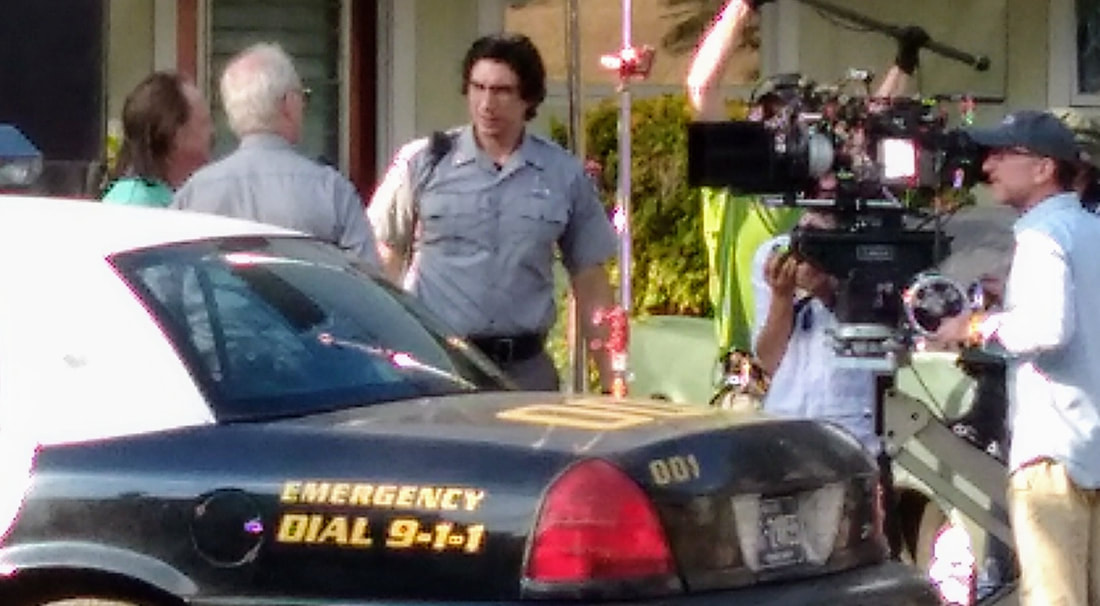 By Harold Goldberg If it's not the weekend, the Catskills Mountain towns along Route 28 are bucolic places full of swallowtail butterflies and pesky young beavers seeking private ponds to make their twiggy dams and mate. Maybe the towns' peaceful weekday nature is why Jim Jarmusch decided to begin filming "The Dead Don't Die" in the quiet hamlet of Fleischmanns, a town of 325 named after yeast makers from the late 1800s. While dozens of films have been shot in the Catskills region beginning in 1921 with a silent version of "Rip Van Winkle," the zombie comedy starring Bill Murray, Adam Driver, Selena Gomez, Daniel Craig and Chloe Sevigny features the most star-studded ensemble cast ever to film in the area Washington Irving once described as a "dismembered branch of the great Appalachian family ... swelling up to a noble height, and lording it over the surrounding country." A month before filming commenced, I listened to a picky eater/retired investor at J. Rocco's Steakhouse in Shandaken as he bragged about helping to scout locations for a new zombie movie. "I do a lot of films," he said as if he were the primary creator. Then he focused his attention on the long-suffering bartender. "Why are you always out of Brussels sprouts?" he asked. On that day of filming, a loquacious older adult at a morning exercise class in the Pine Hill Community Center complained about the crew taking up all of the La Cabana Restaurant and Bar parking lot in Fleischmann's. "I said to them, 'If you're taking up the whole parking lot, why don't you put me in the movie?'" It was a topic, too, at Wendy Brackman's studio, where eight meticulous women artists sat around a table, cutting pieces of mens ties into a varied quilt for a Baltimore museum exhibition called "The Ties That Bind." "I wish Bill Murray would show up at the Colonial Inn in Pine Hill so I could buy him a drink," said Gail Freund. "(It) has more ambiance and character than anything an art director could come up with...I wonder if they need any middle age zombies." At the Delaware Court Motel parking lot in Fleischmanns, Jim Jarmusch, clad in signature black, directed Adam Driver in his role as a bespectacled police officer and Bill Murray, presumably the local sheriff, who conversed with actor Larry Fessenden, perhaps about the imminent zombie invasion. A swallowtail butterfly flitted near Murray as, across the street, a passel of townspeople watched. A family of Hasidic Jews wheeled their baby by, glancing at the set briefly, but not stopping. A few others casually stood in the shade of a building, transfixed. On the curb, Helen Pfeffer, a college professor, took brief videos of the scene when a PA, waving his arms frantically, ran over and asked her to delete them "because they could go viral." She said she had no intention of posting them anywhere, and wouldn't delete them. "You can't film in a public space and expect to control what the public does there," she said. Murray glowed about the movie in an interview with Philly.com in March, saying "Jim Jarmusch has written a zombie script that’s so hilarious and it has a cast of great actors. It’s titled The Dead Don’t Die, and it shoots over the summer. But, no, I will not play a zombie." Set in the fictional town of Centerville, the movie is being described as a companion to Jarmusch's "Only Lovers Left Alive," his 2013 vampire film nominated for a Cannes Palme D'or and starring Tilda Swinton. In one scene shot that day, Selena Gomez' boyfriend, played Austin Butler ("Arrow," "The Carrie Diaries") has been mauled viciously by a zombie. His throat looked bloody, congealed, all bitten up. In the scene I watched, a town resident (actor Larry Fessenden in a white t-shirt) was interrogated about the invasion by Driver and Murray, both clad in cop uniforms. After the questioning ended, Murray walked around his police vehicle to get in on the driver's side and Jarmusch yelled, "Cut." Then, they did the scene over and over again. Not present for that particular piece of the puzzle were the other actors in the cast: Daniel Craig, Chloe Sevigny, Tilda Swinton, Steve Buscemi and Rosie Perez. Later at Oakley's Wood Fired Pizza in Arkville, a high school age dishwasher looked glum. He produced a photo a friend had texted to him from the set. It featured Selena Gomez in blue shorts and a bloodied red shirt. The millennial bemoaned his current fate. "I'm here working while Selena Gomez is in Fleischmann's." He shook his head and disappeared into the kitchen. The bartender laughed, and observed, "There's always people walking in the street at night in Fleischmanns, so it's pretty zombie-like in that way." According to The Catskill Mountain News, "The Dead Don't Die" will continue shooting in the Catskills for approximately five more weeks. The butterflies, beavers and mid-street night strollers are expected to remain long after filming is completed.  Photo by Helen Pfeffer. 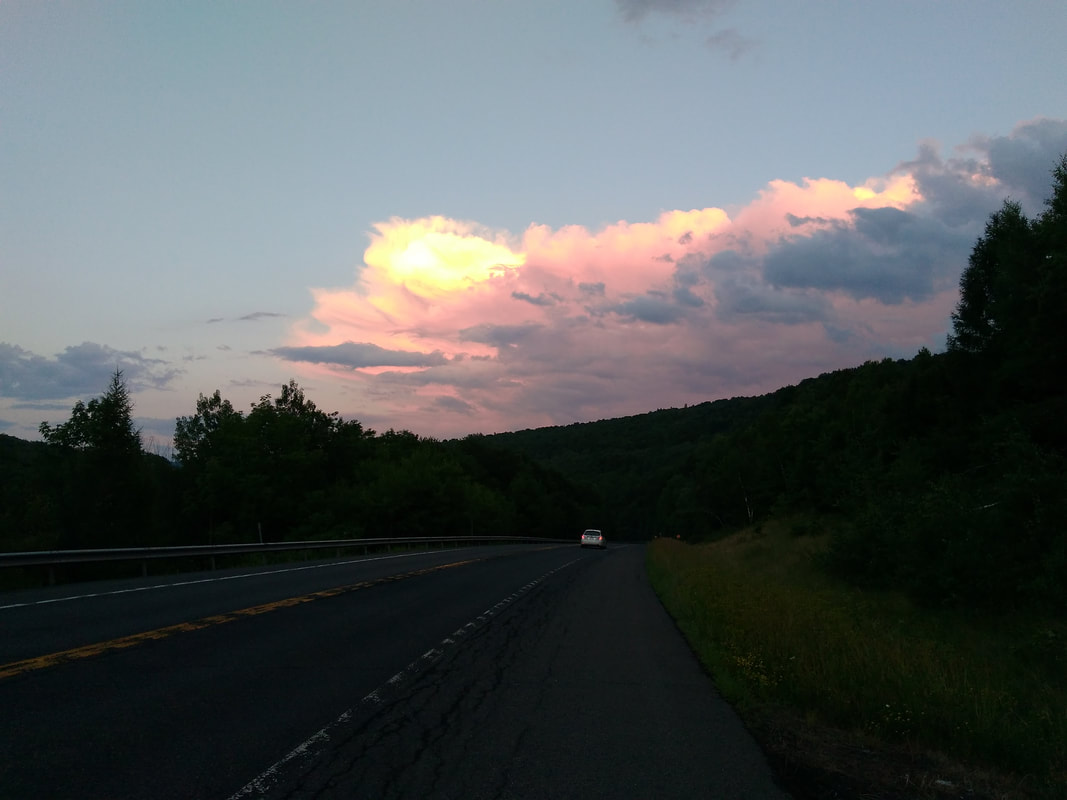 Photo by Harold Goldberg.
I have a story about Harvey Weinstein, the Buffalo News and me. When I started writing about popular music, Harvey Weinstein was a concert promoter who ran an old theater in Buffalo called The Century. People my age loved that theater and we went there to see everyone from Patti Smith to Genesis. When he and his partner sold it - it would be torn down and the word was it would be made into a parking lot - I was an editor at the local college newspaper. I wrote a scathing editorial saying that Harvey didn't care about pop music artistry, just money. Harvey called me into his office for a meeting and yelled at me. It was violent. I was used to violent words, but this was over the top. I felt that at any moment, this could turn from mental abuse to physical abuse. My heart was beating hard - from fear.
I was also contributing to the Buffalo News at the time, a freelance feature writer and concert reviewer. Harvey called my editor and lied to him. He said I had been trying to get into concerts for free by stating I was writing a Buffalo News review. He asked for me to be fired. When the editor called me and said I would no longer be working with the paper, I said, "Why would you believe him and not me? I write for you. I've been writing for you for $35 a review for some time. You've never had an issue with me." He said, "Harvey's word carries a lot of weight in this town." And so, that was it for my work with my hometown paper. Of course, I was devastated. It felt so unfair to someone who was young and idealistic, who just wanted to write. I tried to turn that into something positive. I kept going because I simply needed to write. It was in my blood, like it's in the blood of so many. Some time later, Adam Moss, then at Esquire magazine, ran a long story I wrote about a band from Buffalo. It even made it to the cover. And not long after that, I left Buffalo for New York City. I like to tell myself I really have never looked back. But a couple of years ago when I was consulting for the Tribeca Film Festival and we were having lunch at The Tribeca Grill, one of the festival honchos saw Harvey sitting alone at a nearby table. He introduced me to Harvey, who looked at me with a brief flash of recognition but not full recognition. My heart was beating in the same way again. But that was just for a few minutes. And those moments passed. And now, well, I'm still here, typing away. And Harvey is where he deserves to be. It will get even worse for him, I have no doubt. As a young Buffalo News contributor, I met Nat Hentoff when I was still in college to interview him for a feature story. I was an avid Village Voice admirer and it was Hentoff (and Mark Jacobson) whose compelling and groundbreaking work made me want to leave town to write for the Voice. Hentoff was fearless; he even kept his phone number in the phone book for all to find. I sat on his couch as a college kid and he was completely gracious as we moved willy-nilly from jazz to education (I was nervous and jumped from topic to topic).
His affecting "Our Children Are Dying," about education amid the poverty of Harlem, is one of the reasons I moved the New York Videogame Critic Circle toward community/charitable endeavors. When I began writing for the Voice, Hentoff was still a lauded fixture there. And when I moved from Jersey City to Greenwich Village, part of the reason I settled on 12th Street was because it was down the street from Hentoff's apartment. Simply seeing him walking on the street would dissolve any kind of writer's block I was having. I certainly didn't agree with him on everything he espoused, but he had a great impact on me - and so many. Rest In Peace the great Nat Hentoff. 0 I don't want to make this devastating moment small by comparing it to popular culture.
But in Game of Thrones, they say, "Winter is coming." Well, "Winter is here." Yet there's a deep moment I want to share. It lasted two minutes, early last night, on the street where politicians like the mayor spoke from a stage to the throngs. An older woman sat in the ADA area. She began crying silently, weeping. Then, she took her cane, raised herself up from a folding chair, and began to limp away. Because she was ADA, she had a straight path out past the fenced in crowd. She went from the sidewalk full of bright stadium lights into the looming shadow of the Javits Convention Center where she became barely visible -- but not engulfed by the shadow. Yes, she was crestfallen. She knew what was happening long before almost anyone else did. But even as she limped, she limped quickly and with a strength. I am not very optimistic right now. I think a majority has embraced fear over hope. But that woman, despite her tears - she is a survivor. As she walked away, my sadness didn't deepen. And watching her, I felt the tiniest tinge of optimism. She is a survivor. I am a survivor. Even though it may not feel that way right now, we are all survivors. And some of us, who are fighters, however sad, will try to fight. It's all that we can do: survive, and when our heads are clearer, speak out and fight for what we value in our Constitution and in our hearts. Even after yesterday. Even in winter. |
AuthorVaried thoughts and musing on writing, travel and generally what I've been up to. Archives
April 2023
Categories |
 RSS Feed
Photos from wuestenigel (CC BY 2.0), wuestenigel
